Maraschino Project
Saskatchewan, Canada
Property Description
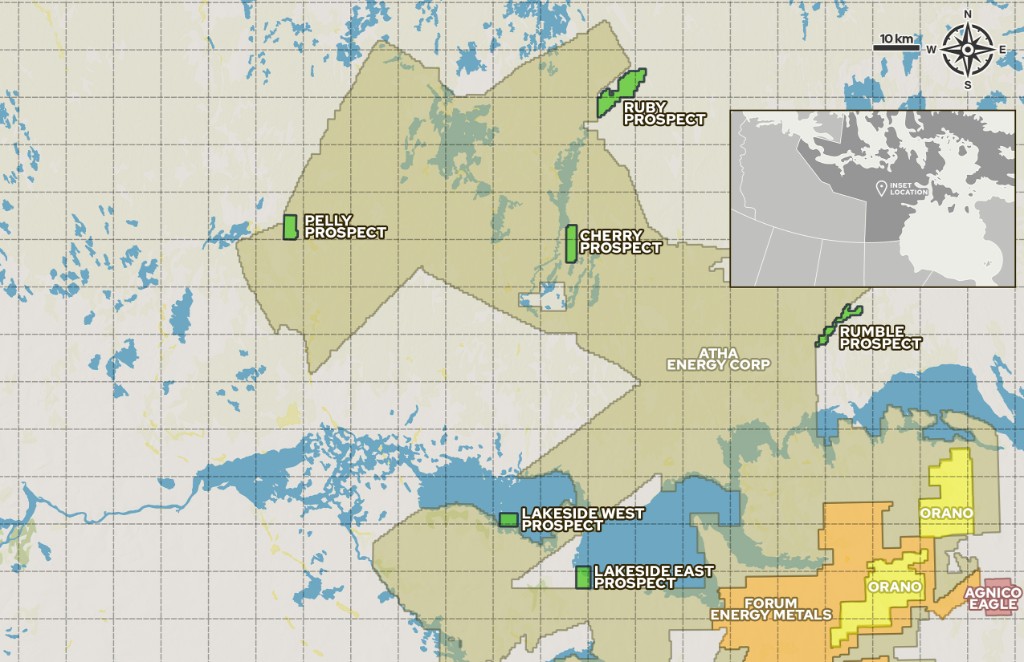
The Maraschino Project is comprised of six properties, consisting of 2 primary prospects and 4 pipeline prospects, all possessing compelling exploration opportunities.
The region's first uranium showing was discovered in 1974 within the Baker Lake area in the Thelon Basin, which sparked exploration activity in the area. A second rush of exploration from 2000 to 2010 saw regional work hunting for unconformity-type uranium deposits similar to that of the Athabasca Basin. Approximately 160 million pounds of uranium has been defined in the Thelon Basin to date.
Pelly Prospect
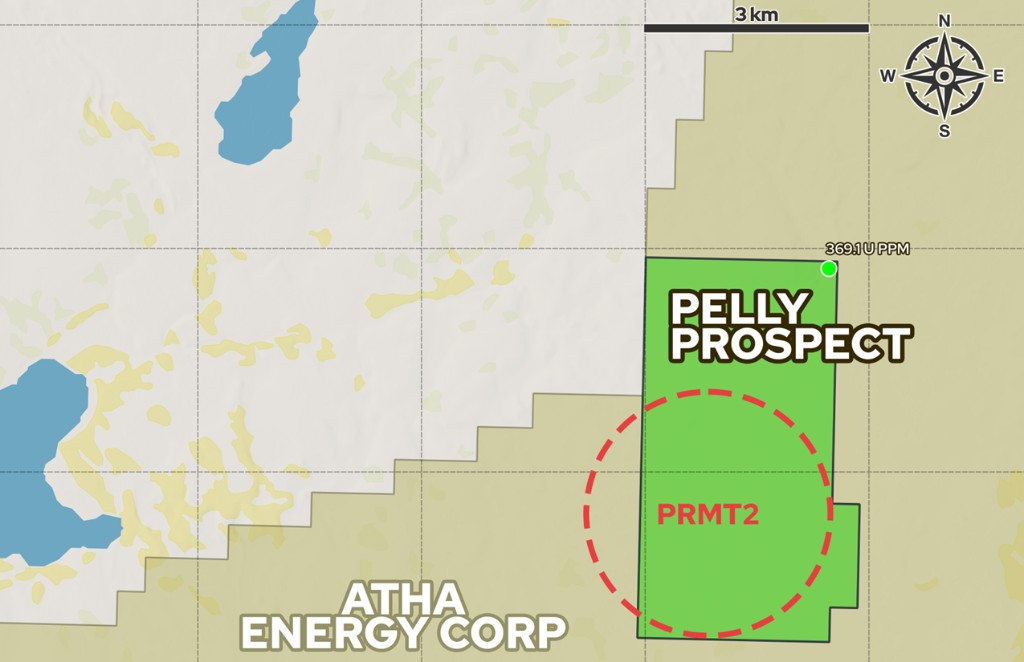
The Pelly Prospect comprises 1,366 ha and is located on the Thelon Basin unconformity 145 km WNW of Baker Lake. Historic work identified lake sediment geochemical anomalies and uranium showings on the property, with follow-up work identifying VLF basement conductors south of the uranium showings. Limited prospecting was completed following the results of a historic airborne survey; however, historic sampling returned a highlight of 369.1 ppm U. The property encompasses the PRMT2 exploration target.
The PRMT2 target lies 225 km from Baker Lake and is an extension of the Amer / McDonald fault system; a contact between the Rae Domain granites and the Thelon Formation of the Dubawnt Supergroup sediments. Clusters of high raw uranium counts (radiometric) are associated with the intersections of interpreted NW-SE and NE-SW structures. An ENE-trending fault contact between the locally outcropping granite and quartzites boulder conglomerate (Whart Gp, Thelon Fm) features boulders that are strongly radioactive altered, bleached and hematized.
Ruby Prospect
The Ruby Prospect comprises 4,057 ha and is located 170 km NW of Baker Lake. The prospect covers the northern edge of the Thelon Basin and is underlain by the Archean Amer group consisting of metapelites. A historic airborne magnetic survey identified a single unusual low resistivity response at the northern edge of the prospect. This response has a NE strike associated with Amer sediment cover but is a well-defined local response that could be alteration within the sediments.